🌟Introduction: The Gold Standard of Professional Connectivity
In professional audio, broadcast, and stage lighting systems, the XLR connector is far more than a simple plug. It is a mechanically secure, electrically robust interface designed to deliver reliable signal transmission in electrically hostile environments. Thanks to its balanced signal capability, standardized pinout, and rugged construction, XLR has become the global standard for professional-grade equipment.
This article provides an engineering-focused, standards-compliant overview of XLR connectors. It explains the electrical principles behind balanced transmission, examines each common pin configuration from 3-pin to 7-pin, and clarifies real-world applications while avoiding common misconceptions. The goal is to provide a technically accurate reference suitable for professional system designers, integrators, and manufacturers.
1. What Is an XLR Connector?
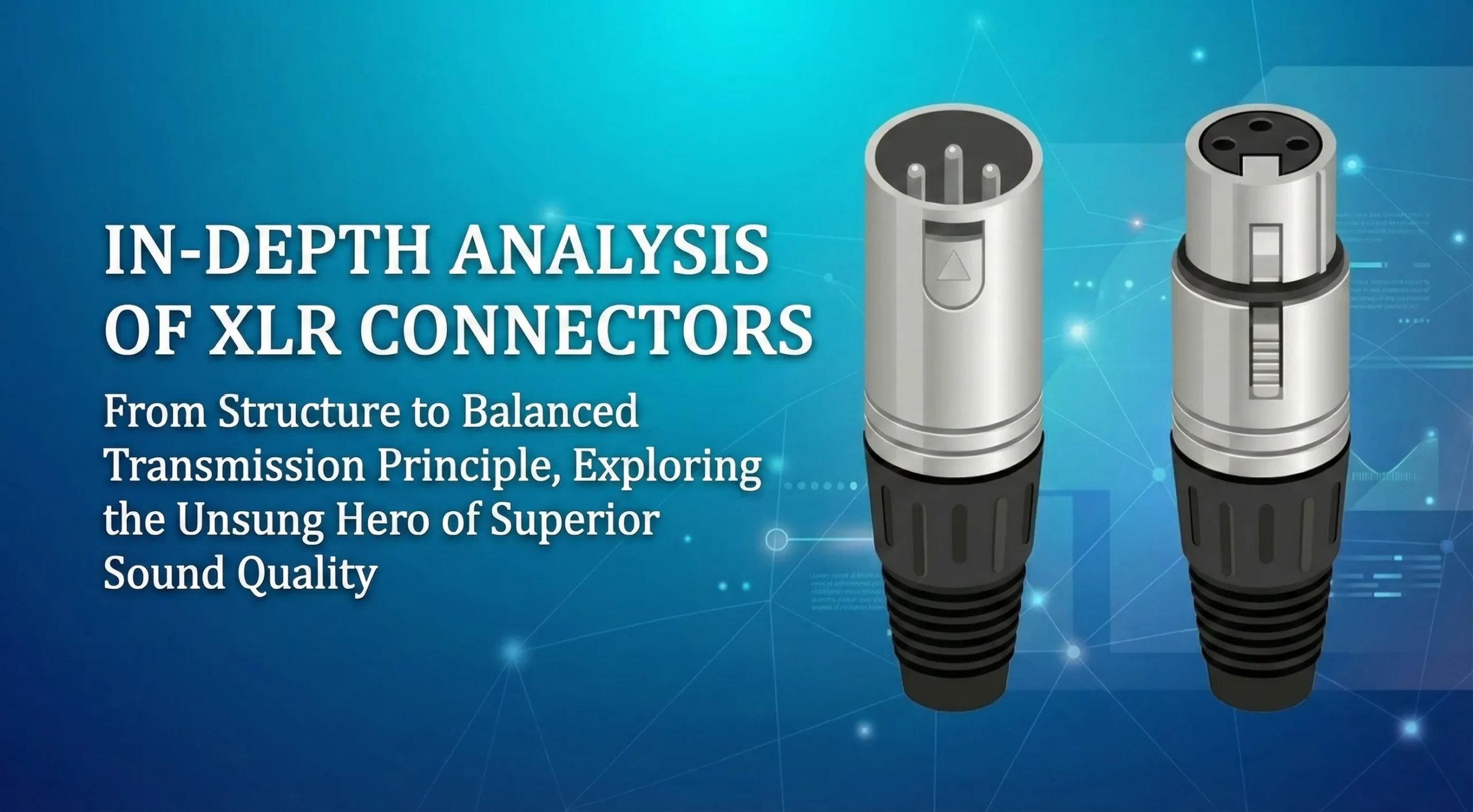
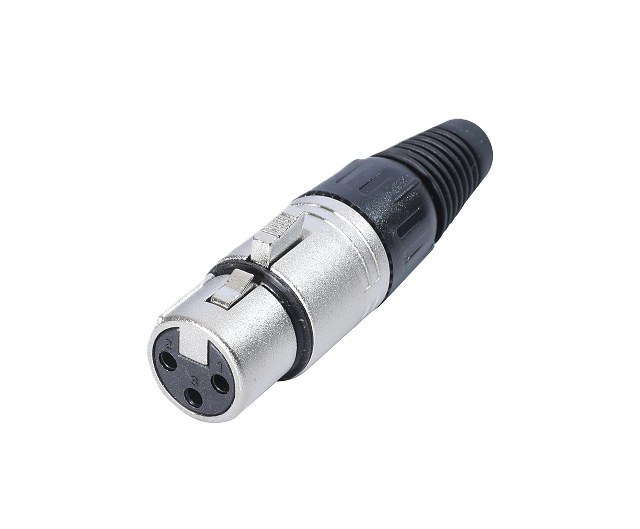
An XLR connector is a circular, multi-pin electrical connector widely used in professional audio, video, broadcast, and lighting control systems.
Key Characteristics
- Metal Shell Construction
Provides mechanical strength and effective electromagnetic shielding against EMI and RFI. - Positive Locking Mechanism
A built-in latch prevents accidental disconnection due to vibration, tension, or handling. - Standardized Pin Assignments
Ensures predictable interoperability between equipment from different manufacturers.
2. Origin of the XLR Designation
The XLR connector was originally developed by Cannon Electric (later ITT Cannon). The name reflects the connector’s design evolution:
- X – The original “Series X” circular connector
- L – Addition of a locking latch
- R – Introduction of a resilient insulating compound in later revisions
While historical interpretations vary slightly in wording, this naming convention is widely accepted in professional documentation.
3. Operating Principle: Balanced Signal Transmission
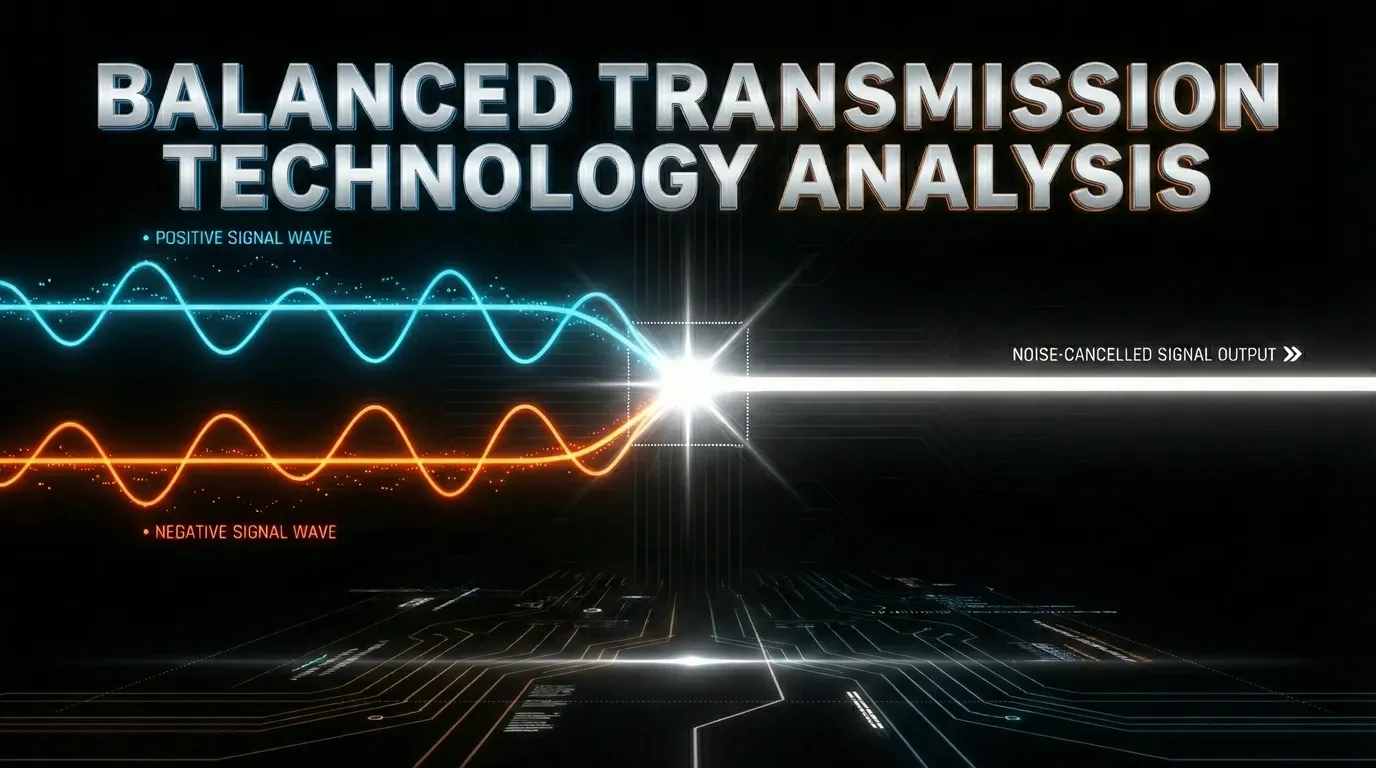
The primary reason XLR connectors dominate professional audio is their support for balanced transmission, which significantly improves noise immunity over long cable runs.
3.1 Balanced Audio Fundamentals
A standard 3-pin XLR connection carries audio using three conductors:
- Pin 2 (Hot / +) – Non-inverted signal
- Pin 3 (Cold / −) – Inverted signal
- Pin 1 (Ground / Shield) – Cable shield and reference ground
The same audio signal is transmitted on Pins 2 and 3 with opposite polarity. Any external electromagnetic interference couples equally into both signal conductors.
At the receiving device, the inverted signal is phase-corrected and summed with the non-inverted signal. The desired audio is reinforced, while noise that is common to both conductors is cancelled. This mechanism is known as Common-Mode Rejection.
Result
Balanced transmission enables clean, low-noise audio over cable lengths well beyond 30 meters (100 feet), even in environments with strong electrical interference.
4. Mechanical Reliability in Professional Environments
XLR connectors are available in male (pin) and female (socket) versions. The locking latch engages automatically upon insertion and must be deliberately released to disconnect. This design ensures connection stability on live stages, broadcast facilities, and mobile production rigs where vibration and movement are unavoidable.
5. XLR Connector Types and Applications
While XLR connectors share a common form factor, the number of pins defines their electrical function and intended use.
5.1 🎤XLR 3-Pin — Professional Audio Standard
The 3-pin XLR is the most widely used configuration in professional audio systems.
Standard Pinout (per AES14):
- Pin 1: Ground / Shield
- Pin 2: Hot (+)
- Pin 3: Cold (−)
Typical Applications:
- Microphones
- Mixing consoles
- Audio interfaces
- Active loudspeakers
- Phantom power delivery (+48 V DC)
5.2 🎥XLR 4-Pin — Power and Communication
The 4-pin XLR is commonly used where audio and DC power must coexist or where bidirectional communication is required.
Typical Applications:
- 12–14VDC(Nominal) DC power for broadcast and cinema cameras
- Professional intercom and headset systems
- Broadcast headphone outputs
5.3 💡XLR 5-Pin — DMX512 Lighting Control
The 5-pin XLR connector is the official physical interface specified for the DMX512 lighting control protocol.
Engineering Rationale:
- Controlled Impedance Requirement
DMX512 is based on RS-485 differential signaling and requires a cable with a controlled characteristic impedance of approximately 110 Ω. - Cable Discipline
Standard microphone cables are not designed with controlled impedance and may cause signal reflections, data errors, or unstable lighting behavior when used for DMX. - Anti-Mating Safety
The 5-pin format reduces the risk of accidental connection between lighting control systems and audio equipment, preventing inappropriate voltage or phantom power from being applied to DMX devices.
5.4 🎻XLR 6-Pin and 7-Pin — Specialized Applications
These configurations are used for niche or high-end applications where additional conductors are required.
- 6-Pin XLR
Found in dual-channel intercom systems and specialized measurement or control equipment. - 7-Pin XLR
Commonly used with tube microphones that require an external power supply unit (PSU). A single cable carries:- Balanced audio output
- Heater voltage for the vacuum tube
- Plate (high) voltage
- Ground references
6. Electrical Safety and Grounding Behavior
In professional-grade XLR connectors designed to current standards, the ground contact (Pin 1) is intended to connect first and disconnect last during mating. This design helps:
- Safely discharge electrostatic buildup
- Reduce audible transients during hot-plugging
- Improve overall system grounding integrity
Proper implementation of Pin 1 grounding, as addressed in standards such as AES48, is critical for minimizing noise and preventing ground-related interference.
7. Key Advantages of XLR Connectors
- High Noise Immunity through balanced transmission
- Mechanical Security via locking connector design
- Electrical Safety through controlled grounding behavior
- Long-Term Reliability in touring, broadcast, and fixed installations
- Versatility supporting audio, data, and power distribution
Conclusion
The XLR connector remains a cornerstone of professional AV system design because it solves multiple engineering challenges simultaneously: noise rejection, mechanical reliability, safety, and interoperability. From the ubiquitous 3-pin microphone interface to the impedance-controlled 5-pin DMX connection and the multi-voltage requirements of 7-pin tube microphones, each XLR variant exists for a clear technical reason.
For any application where signal integrity and reliability are non-negotiable, XLR is not merely a legacy standard—it is an engineering solution that continues to justify its place in modern professional systems.