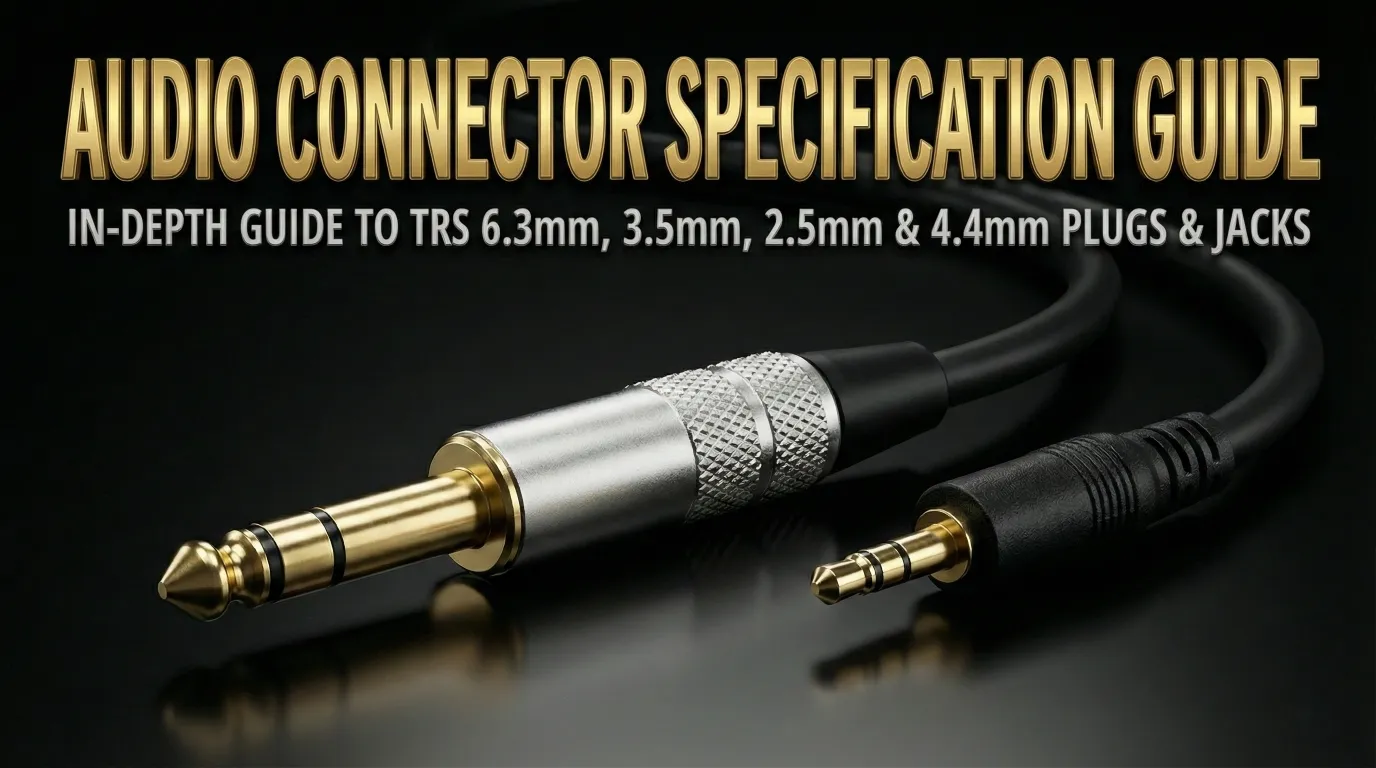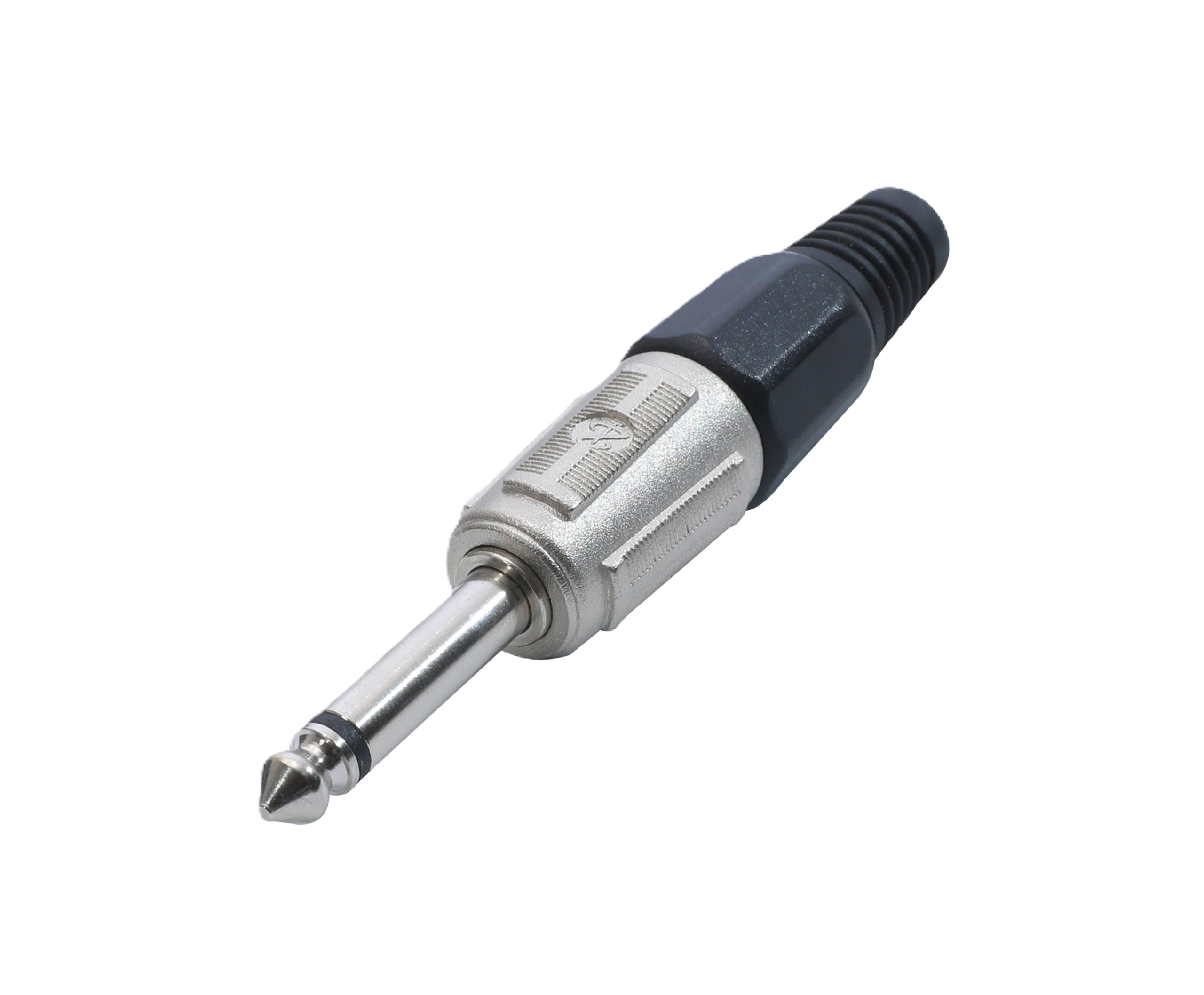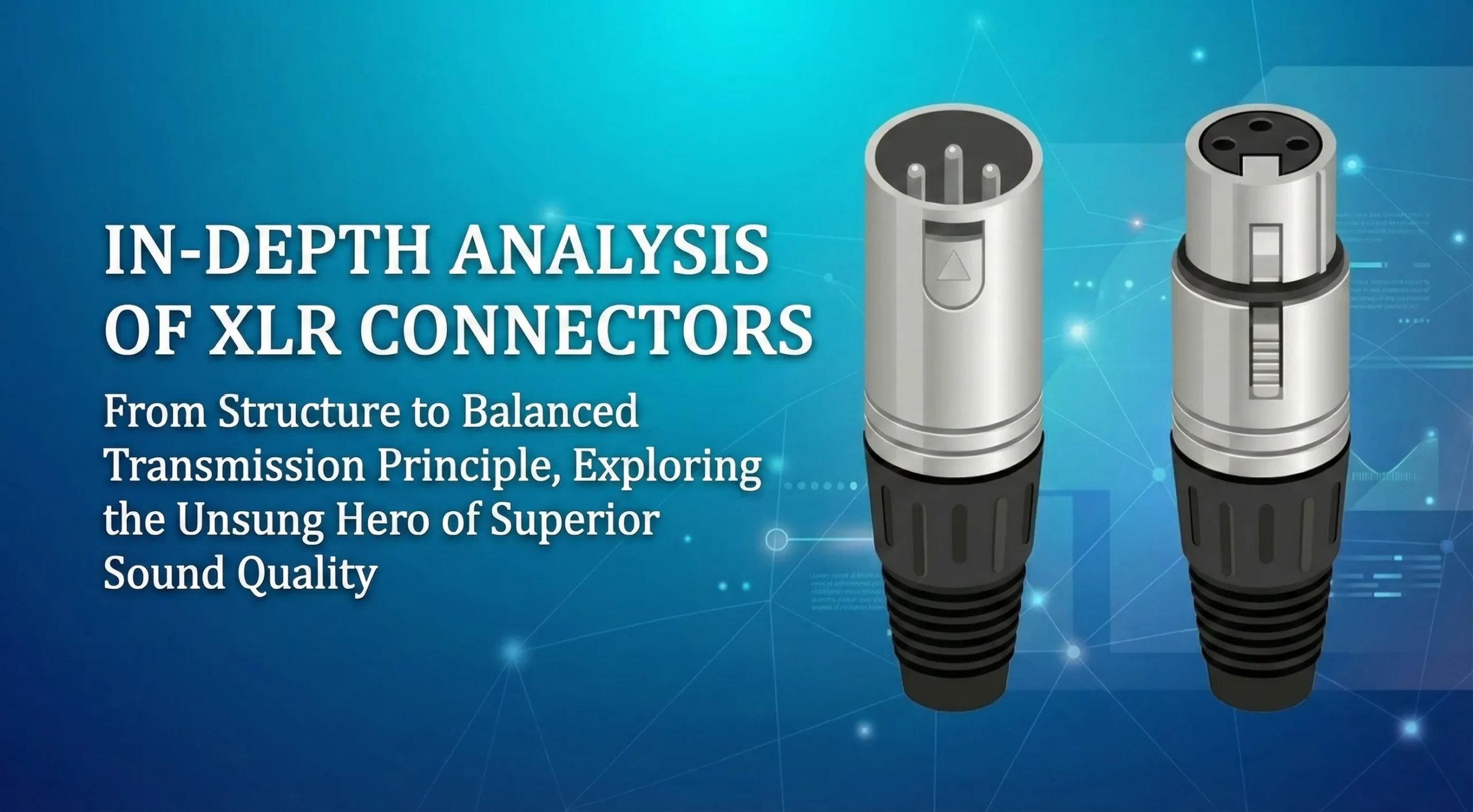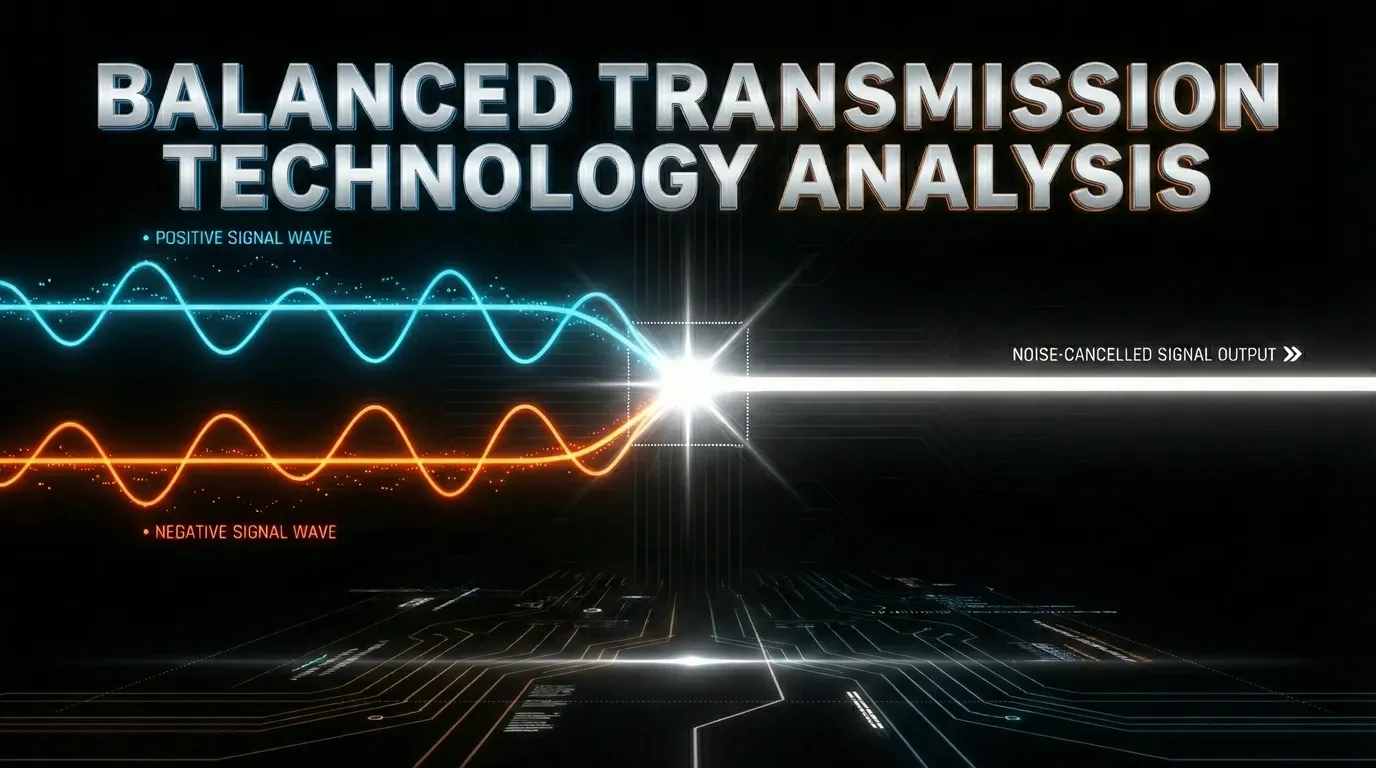
Audio connectors (commonly known as Phone Jacks) are defined by far more than their physical size. Behind each connector lies a set of engineering decisions involving signal transmission logic (single-ended vs. balanced), grounding strategy, shielding, and mechanical reliability.
For audiophiles and product development engineers alike, misunderstanding these specifications can result in suboptimal audio performance—or, in severe cases, permanent damage to amplifiers or players due to improper short circuits.
This article combines engineering fundamentals with real-world application to provide a clear, authoritative reference for today’s mainstream audio connector standards.
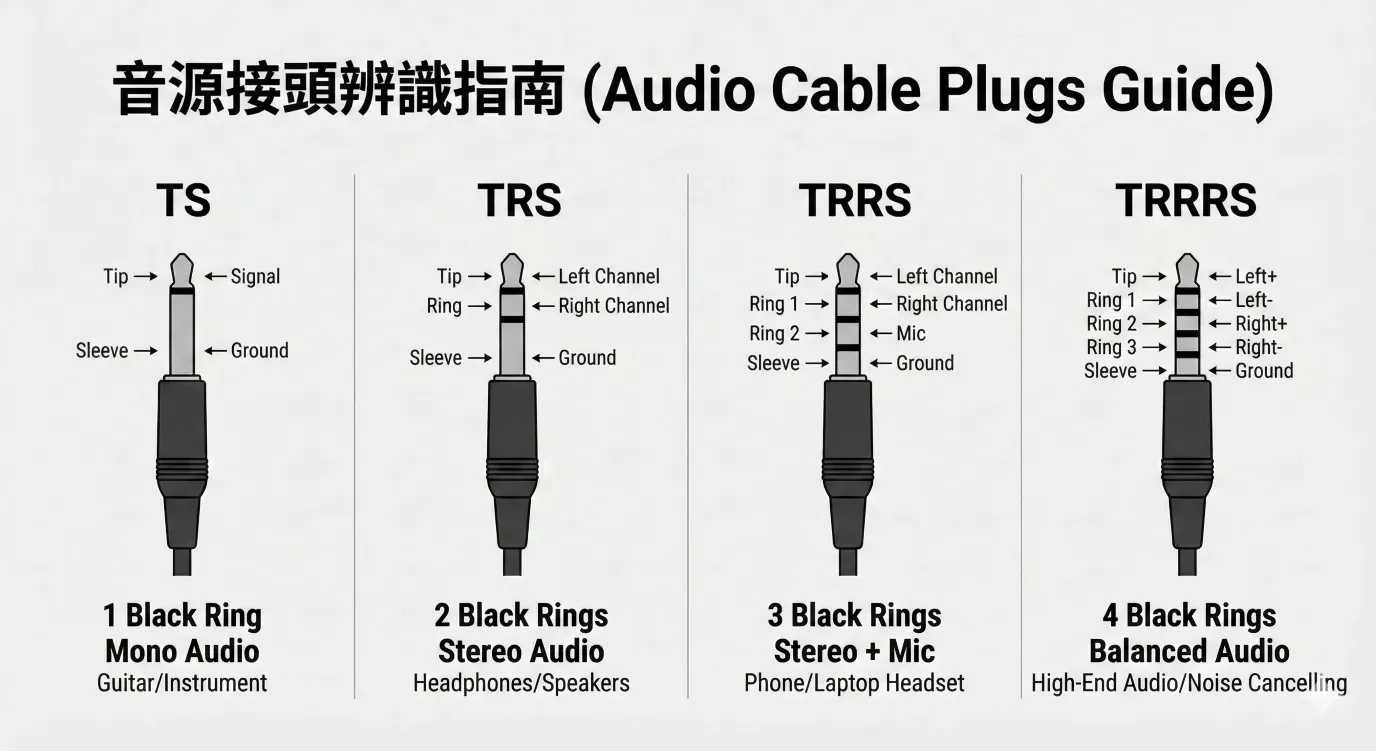
1. Engineering Definitions: TS / TRS / TRRS / TRRRS
In standard Phone Jack design, conductive contacts are separated by insulating rings. The number of poles indicates only the number of physical contacts.
Crucially, whether a connection is balanced or single-ended is determined entirely by the device’s circuit design—not by the connector shape itself.
| Abbr. | Full Name | Poles | Common Applications |
|---|---|---|---|
| TS | Tip–Sleeve | 2 | Mono instruments (guitars), single-ended line out |
| TRS | Tip–Ring–Sleeve | 3 | Stereo headphones, balanced mono (pro audio) |
| TRRS | Tip–Ring–Ring–Sleeve | 4 | Smartphones (with mic), some legacy balanced headphones |
| TRRRS | Tip–Ring–Ring–Ring–Sleeve | 5 | 4.4mm Pentaconn balanced headphone standard |
2. Mainstream Specifications & Pinout Logic
All pinouts below are read from the tip of the plug toward the sleeve.
2.1 6.3mm (1/4″) — The Professional Standard
- Typical Use: Studio equipment, electric guitars, audio interfaces, active studio monitors.
- Engineering Strength: Large contact area, highest mechanical durability; ideal for frequent insertion cycles.
- Common Pinout Definitions:
- Stereo (TRS): Tip = Left, Ring = Right, Sleeve = Ground
- Balanced Mono (TRS): Tip = Hot (+), Ring = Cold (−), Sleeve = Ground (Common in connecting mixers to speakers)
- Verdict: This dual usage is why 6.3mm remains the backbone of professional audio systems.
2.2 3.5mm (1/8″) — The Consumer Electronics Standard
- Typical Use: Smartphones, laptops, portable players, consumer audio devices.
- Characteristics: Compact, ubiquitous, and cost-effective.
- Engineering Context: Most 3.5mm outputs are single-ended with a shared ground, which limits channel separation and noise immunity compared to balanced designs.
- Important Standards:
- CTIA vs. OMTP: 3.5mm TRRS connectors (for headsets) follow two incompatible standards where the Ground and Microphone pins are reversed. Incorrect matching causes microphone failure.
- Historical Note (Niche Balanced Use): Before 4.4mm became standard, some manufacturers (e.g., HiFiMAN, OPPO, older Sony models) utilized 3.5mm TRRS for balanced output. However, these are proprietary/rare implementations and should not be confused with standard jacks.
2.3 2.5mm — The Phasing-Out Transitional Solution
- Typical Use: Older high-end DAP (Digital Audio Player) balanced outputs.
- Engineering Limitations:
- Extremely thin plug shaft → insufficient mechanical strength.
- High risk of bending or snapping under lateral stress.
- Standardization: While early adoption was chaotic, Astell&Kern (A&K) eventually established the de-facto pinout standard (R- / R+ / L+ / L-), stabilizing the market temporarily.
- Current Status: Rapidly being replaced by 4.4mm due to mechanical fragility.
2.4 4.4mm (Pentaconn) — The Modern Balanced Standard
- Typical Use: High-end DAPs, desktop amplifiers, audiophile headphones.
- Design Philosophy: Designed specifically for balanced transmission, 4.4mm addresses the weaknesses of 2.5mm while improving electrical performance.
- Standard Pinout (JEITA RC-8141C):
- Tip: L+ (Left Positive)
- Ring 1: L− (Left Negative)
- Ring 2: R+ (Right Positive)
- Ring 3: R− (Right Negative)
- Sleeve: GND / Shield
- Engineering Advantages:
- Complete separation of left/right positive and negative signals.
- Reduced crosstalk and common-mode noise.
- Significantly improved mechanical strength compared to 2.5mm.
3. Engineering Warnings: Adapters & Material Myths
⚠️ CRITICAL WARNING: Do NOT Improperly Adapt 4.4mm to 3.5mm
This is not merely a sound quality issue—it is a hardware safety risk.
- 4.4mm Output: Balanced, actively driven L+, L−, R+, R−.
- 3.5mm Headphones: Single-ended, shared ground.
The Risk: Using an improper adapter forces the balanced negative outputs (L− / R−) to short directly to ground. This causes immediate overcurrent in the amplifier output stage, potentially triggering protection circuits or permanently damaging op-amp ICs. Such user-induced failures are typically not covered under warranty.
Gold Plating: Conductivity vs. Durability
From an engineering standpoint, electrical conductivity ranks as follows:
Silver (Ag) > Copper (Cu) > Gold (Au)
Engineering Value of Gold:
Gold plating is not used to increase conductivity, but to utilize its chemical inertness. It prevents oxidation and corrosion, ensuring stable contact resistance over time and avoiding intermittent connections caused by oxide layers.
4. Comparison Summary
| Spec | Structure | Balanced Capable? | Recommended Scenario | Verdict |
|---|---|---|---|---|
| 6.3mm | TRS | Usage dependent | Pro audio, Audio Interfaces | Most robust; ideal when space allows |
| 4.4mm | TRRRS | Yes (Native) | High-end headphones, DAPs | Best balanced solution overall |
| 3.5mm | TRS / TRRS | No (generally) | Mobile, general use | Most common; limited by shared ground |
| 2.5mm | TRRS | Yes | Legacy devices | Not recommended due to fragility |
5. Frequently Asked Questions (FAQ)
Q: Why does my 4.4mm connector have 5 poles, but my balanced cable only uses 4 wires?
A: The fifth pole (Sleeve) is intended for Ground or Shielding. Some headphone cables omit the shield layer and therefore only connect L+, L−, R+, and R−. This is normal, though using the ground/shield connection (Pentaconn Ear) may result in a lower noise floor.
Q: Is balanced output always better?
A: Generally yes—assuming comparable amplifier topology and power supply design. Balanced outputs typically provide greater voltage swing, higher output power, improved dynamic range, and superior channel separation through common-mode noise cancellation. These benefits are most noticeable with high-impedance or low-sensitivity headphones.
Conclusion
- 6.3mm: The professional standard for durability and reliability.
- 3.5mm: The consumer standard, convenient but electrically limited.
- 2.5mm: A legacy transitional solution nearing obsolescence.
- 4.4mm: The most mature and safest balanced headphone interface today.
Understanding the engineering logic behind audio connectors is essential for achieving optimal sound quality, long-term reliability, and system safety.